Showing posts with label Game Studies. Show all posts

Friday, 11 December 2015

Game Studies - Post-mortem for Board Game Project

Game Studies Post-mortem

For this project we were asked to generate a team brief describing the tasks that we must undertake in the design of our board game. This brief had to be calculated so that the workload reflected the time constraints of the project and could be referred to throughout the project for reference. Our team brief asked for the creation of a board game that conformed to the theme and style of the Star Wars Battle Front IP, through the use of industry standard design software. After some research we decided as a team to go in the direction of a war game, similar to that of Risk or Game of Thrones but with elements from board games such as Chess.
               We started the task by producing a series of sketches for the layout of the game board and some general annotations about how the ideas would work. Once our individual ideas were complete, we then joined together and deliberated over the ideas we had come up with. Deciding on the best idea and how we could incorporate some of the other ideas into this. Using this method of communication made everything fair between the members of the team because every person had their own input with regards to the mechanics of the game. Once this process was complete we had a clear idea of what the end result should look like but more precise rules and mechanics such as units attack and defence was yet to be decided. These were much more intricate questions that needed to be answered through trial and error when testing the playability of the game.
               Our second task was to delegate jobs so that every member of the team had a relatively equal workload. A game board needed to be designed as well as the packaging to contain it. The components for the board game also needed to be designed such as the cards, unit counters and buff tokens. Once all of these items had been designed and built, a rule book needed to be written and designed. Each of the members of the team conveyed their strengths and weaknesses in an attempt to ascertain which person was best for which job. Once everyone was happy with their allocated jobs we then all set to work individually.
               My individual tasks were to design the packaging for the board game and build said packaging. To start this task I took a trip to Toys ‘r’ Us In order to gain a better idea of what is displayed on the packaging for board games. Once I had a clear idea of what my design should include I then set to work on my design. Adobe Photoshop was used to complete the packaging design. I was able to complete measurement calculations, build a box net template and create illustrations for display on the packaging design. Upon reflection it may have been easier to create the illustrations using Adobe Photoshop but complete the packaging design using Adobe Illustrator, importing the images created using Photoshop.
               Building the package design presented me with some problems, as I wanted the finished product to meet a professional standard, or as close to professional as possible at least. I thought hard about which materials to use and how the process should be carried out. Once all of the variables were taken into consideration I began the build process. Compressed cardboard demonstrated the correct properties that I had seen in my research, allowing for a sturdy and durable construction that would last through multiple uses. I did not have access to the professional printing capabilities needed to print onto the card. This left me with the option of combining a light weight stock print and the compressed cardboard, I used spray mount to complete this task. Knowing that spray mount is a flexible adhesive made me realise that I could not use it to fix the box together. Super glue was the only substance that I could think of that would stand the test of time and hold the packaging together through multiple uses. Once the packaging was build I realised that more care needed to be taken during the measurement calculations in order for the product to fit securely inside the packaging, this meant that the packaging was a fraction too small for the product. If I was to attempt this task again I would not make this same mistake and the problem would be corrected early in the design process.
               As deadline loomed over us the communication between the team seemed to diminish. I believe this was because the other team members had work to complete for other modules. Taking this into consideration I tried to compensate by completing as many tasks for the board game design as possible. This involved finalising any token designs, printing any outstanding work and building the game board. At all times during this period I was communicating with the team to resolve any problems that I came across and to make sure that each member’s ideas remained intact within the design. Unfortunately I could not complete checks on every element of the design due to time constrains and the workload that I was faced with. For this reason the rule book for the board game was not checked prior to game testing deadline.
               In conclusion I believe that this project went well in the terms that a playable and near professional standard board game was produced. Communication issues between the team towards the end of the project presented a problem but most of the issues were overcome, with each member of the team contributing useful information in the completion of the build process. With a little more communication we may have been able to iron out any issues in regards to the information that was presented in the rulebook.


Thursday, 10 December 2015

Game Studies - Building The Board and Packaging

To start the construction process I needed to acquire the materials for the packaging and the game board. These materials were compressed cardboard, A1 gloss stock for printing, A1 mat stock for the folding mechanism, a laminating plastic roll, spray mount, superglue, a craft knife, metal ruler and a cutting board. Once all of the materials were acquired I began work on the construction. First the box net and board design were printed, having been designed to specific measurements.I used spray mount to stick the printed box net to compressed cardboard. The box net was then cut out using the craft knife, a metal ruler and a cutting board. Using the craft knife to score along the card I then folded the box net into the intended shape, using superglue to hold the whole thing in place.

The game board design was split into four sections in Adobe Photoshop before print. These sections were then dilated using the Xnormal plugin. This was to assure that the paper would fold around the cardboard and match up perfectly to the board section next to it. For the game board I cut out the square sections of card before sticking the board design down using spray mount.


The design for the box net only included the lid for the box. This presented me with the problem of measuring and drawing out the underside of the box. I needed this underside to be very slightly smaller, allowing the lid to slide over the top of it. Measuring the lid and removing the thickness of the card x2 gave me the value that I needed. Using the metal ruler and a pencil I drew out the underside box net, cutting it out using a craft knife and metal ruler on a cutting board. The box was then constructed and fixed with superglue.


Having stuck the game board sections to compressed cardboard using spray mount, I was now left with the task of folding and fixing the flaps of paper around the cardboard. The flaps were fixed using superglue as spray mounts adhesion shows too much flexibility for this job.


Being printed on glossy stock I was worried about the ink smudging during the use of the game board. To remedy this I decided to laminate the sections of the game board. I cut the laminating plastic to size and carefully applied it over the top of the glossy paper, folding it over the edges of the card as I had done with the paper. 

Finally the task of building a mechanism that would allow the game board to fold was at hand. This took some very careful planning and consideration as the game board needed to fold up neatly whilst having the sections line up when the board was unfolded. First I cut out a square piece of mat stock, slightly smaller than all the sections combined. This paper then had a slit cut from one edge to the center, having one section of the board glued in one corner. another section of the board was placed over the glued section of the board having the paper fold over the top, the paper was then fixed to this board with superglue. This process was necessary to ensure that the board folded correctly. The other two sections of the board were then simply super glued to the remaining spaces on the square paper, making sure that they lined up with the other sections.

In conclusion I believe that the process went smoothly however their was a slight miscalculation when fitting the board into the packaging. I had not considered the slight increase in the size of the game board from folding the paper over the cardboard sections. This meant that the folded game board was mere millimeters too large to fit into the underside of the box. The finished product looks appealing and works well for the purpose that it was intended.


Wednesday, 9 December 2015

Game Studies - Packaging Design


 To start the design I needed to measure out and create a box net. The measurements were carefully considered, taking into account the measurements of the game board when folded into four sections. The storage of game components such as dice and tokens was also taken into consideration. The guides were drawn on a separate layer, using the guide and hard brush tools.


I had a composition in mind for the illustrations on the cover of the box. Splitting the illustration up in my head I was able to give myself manageable tasks. The illustration of Luke was produced first, on a separate layer. Using the soft round brush on a low opacity with shape dynamics allowed me to sketch out the pose of the character.


Using the pose sketch as a guide I began to add detail to the sketch on a new layer. Using a soft round brush with shape dynamics makes the process seem much like a pencil and paper sketch. At this part of the process some care is taken to attain the correct proportions for the character.
 Once the detail guide sketch was complete it was easy to complete a detailed sketch illustration on a new layer over the top of this, using the detail sketch as a guide. I am fairly happy with the way that the sketch turned out.
 Employing a similar method of building up sketch detail in separate layers I then completed the rest of the illustration.
 Block colour was added on separate layers underneath the sketch layers. At this point I also added a hexagon pattern, which I believe brings the packaging design in line with the game board design.
 As it is a Star Wars board game, of course there should be stars. I achieved this by using a round brush preset with the scattering option checked. It was then just a matter of brushing across the box net, creating the star effect that you see here.
 Once all of the elements were in place I brought in the logo design that I had created. I went through many iterations of this logo design before finally deciding on this one. Duplicating the layer and flipping them into position on the box net seemed to complete the package design. It is worth noting that any typography should be rasterized before sending for print, the print company may not have the specific or custom typography that you have used.
 Upon second inspection I decided that the design was more appealing with only the sketched illustration displayed. This was achieved by inverting the black line work that I had created, turning off the block colour layers. This decision was reached by the team as a whole.


In conclusion I believe that the design is very strong and similar to that which could be seen in a store. I would have liked to have completed a full colour concept for the illustrations on the packaging but time constraints forbid it.

Sunday, 6 December 2015

Game Studies - Rules of The Board Game

Once we had an idea of what we needed to achieve we then deliberated and James Betton illustrated the board game for the team. Each section of this board serves a purpose, of which will be explained in the rule book present in the games box.

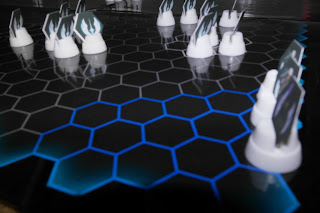
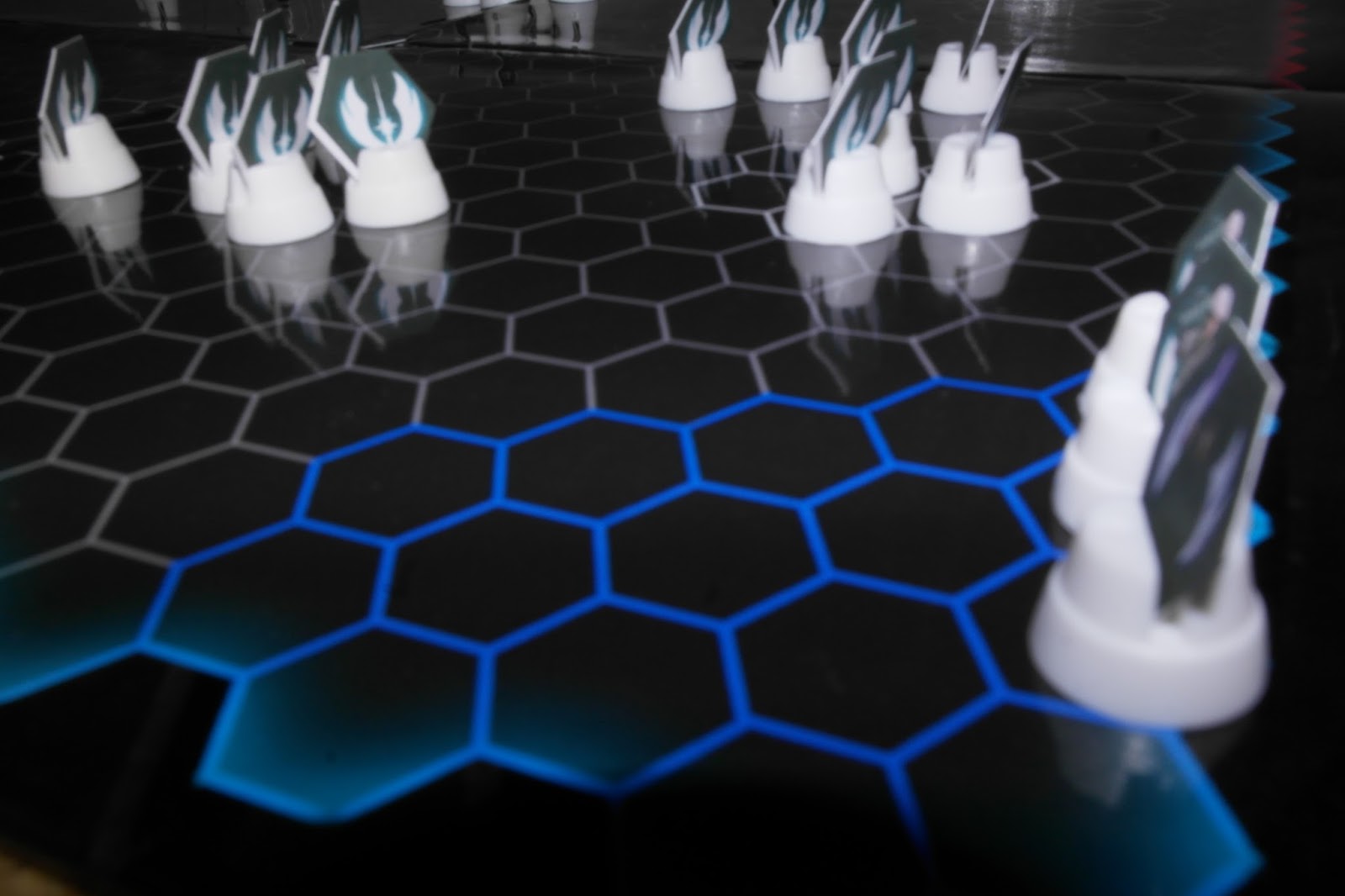
The blue and red areas designate the starting zones for each player. Each player starts with fifteen units and one hero, placing these units in any order that they wish within the designated area.

Six highlighted areas designate zones that can be captured and have turrets place upon them. In order to achieve this players must move seven units into these zones and wait two turns, once the second turn is over the player may then place their turret.

Smaller highlighted areas represent token zones, these are where tokens can be won. The tokens may give defense or attack buffs to the units of the player that gains the token. In order to gain the token the player must have higher or equal attack to that of the defense shield surrounding the token zone.

Segregated slots were placed at the top and bottom of the board, these correspond and belong to the respective players. There are ten slots on this segregated bar, each can be filled with a force token. force tokens are gained by defeating enemy units. They can be used to summon reinforcements or you can fill the bar with tokens to gain a hero buff.

Conflict in the game is decided by the defense and attack of participating units. If the attack of the attacking units is higher than the defense of the defending units then the attackers win the conflict, this also works the other way around. If the attack and defense of each army participating in conflict is equal then a dice roll will decide the outcome.

At the start of the game each player must choose a hero, each hero having specific traits that would suit different strategic play styles.


Each player must decide carefully about which play style they wish to use against their opponent. This choice alone may be the wining or loosing factor of the entire game.

One of two ways to win the game is to defeat the other players hero in combat, therefore you may wish to protect your hero or take a more aggressive approach to the game.


Each unit type has its own counter, these are moved around the board by the player in order to gain strategical advantage. Each unit type also has different attack and defense points which determines the outcome of any conflict. The attack or defense of participating units in the battle are added together, the sum of which being used to determine said conflict.


There are two ways in which a player may win the game. These are if one player defeats the others hero then this player wins the game. If one player can capture the other players base and hold it for a duration of five turns then they shall win the game.

Each person in the team was given a set task with regards to the artwork for the board game. My task is to design and build the 3D turret pieces for the game board and design and build the box to contain the board and all of its components. I will make a new post on my design process for the packaging but until then, thanks for reading and have a good one!

Thursday, 19 November 2015

Game Studies - Board Game Research


As a team we decided to base our board game design on the Star Wars Battlefront IP. With this in mind we set out to research board games that had elements of military warfare. The first of said board games was A Game of Thrones: Second Edition. Once the board was layed out on the table and all of the games components were organised in front of us, we read through the rules and attempted to decipher how this game should be played. Two hours passed as we tried to clarify what each component was for, how the game should be set up and what actions are allowed to be taken on each turn. At this point everybody began to feel a little overwhelmed and agitated.

By a group suggestion we set up the board as portrayed in the instructions and began to play through the game, in an attempt to learn as we went along. This first game was a bit of a struggle to get through, towards the end we all had an idea of what we were supposed to be doing.


Deciding to play a second game in order to get our heads around the mechanics of the game more fluently. At this point we all began to feel a little more at ease with the game, as we began to form alliances and plan out our movements with much more confidence than the first game.

Towards the end of the second game we had gained ideas from this games mechanics that we might want to incorporate in our own game design. The tokens for example were a good way of keeping track of player progress. Unit attack and defense stats were a known constant throughout the game, giving the players a clear idea of how to proceed in combat. Cards are also used in the game to decide the outcomes of conflict or to add an interesting constraint at the beginning of a turn.

In conclusion this board game was intriguing and did turn out to be an enjoyable experience however the sheer number of rules and components made it a daunting task to even start playing the game. As a group we decided that it is better to have simple rules in our game, ones which are easy to understand and do not overwhelm the intended audience. Certain elements of this board game, such as the cards and tokens, were a great way of moving the game forward and giving the players a sense of achievement. Deciding as a group that these are elements we would like to integrate into our own design for the board game.

The game of chess is extremely strategical but at first glance it can seem like a simple game to learn. Our team decided that our board game should have two players, much like chess, with different units that move on a grid. The idea that one piece has more importance than all the rest, such as the king in chess, was of great importance in our research. This could be the manner in which a player wins or looses our board game.


The online version of Civilization 4 uses hexagonal sections to designate areas for troop movements and player conquests. We found this to be a better solution than the square sections of a chess board, giving the player more movement options. There could also be designated areas in which a player could take control, illustrated by thicker lines around a group of hexagon spaces.


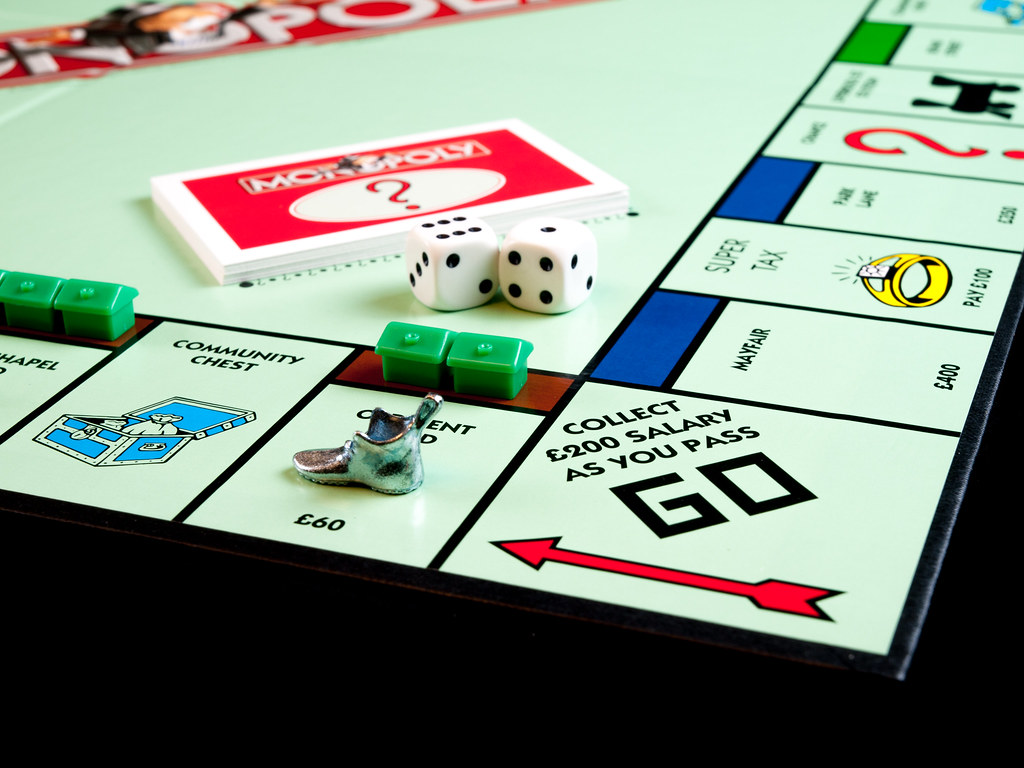
In another board game called monopoly, players can 'conquer' zones by placing houses upon them, these houses can then be traded for hotels in order to increase the advantage that this zone gives said player. This mechanic game me an idea for our own board game, capturing a designated zone with a certain amount of units could allow you to summon a more powerful unit and strengthen said players hold on that zone. In keeping with the Star Wars theme, this unit could be a turret of some kind which had more fire power than other units.


Once all of this information was taken into account, we then began to read through the mechanics that we had selected from the research. Decisions were then made as to which mechanics we should keep and which should not be used. After this stage of the development process we could then begin to for a draft rule book for our board game. Thank you for reading and have a good one!

--------------------------------------------------------------------------------------------------------------------------

Bibliography

Civilization 4 (no date) Available at: http://vignette3.wikia.nocookie.net/civilization/images/e/e0/Final_Siamese_city_going_down_%28Civ5%29.jpg/revision/latest?cb=20101229203523 (Accessed: 6 December 2015).
How to make your own board game (no date) Available at: http://www.wikihow.com/Make-Your-Own-Board-Game (Accessed: 10 November 2015).
Rebel Aliance (no date) Available at: http://static.comicvine.com/uploads/original/14/145389/3452694-7162735355-Star-.jpg (Accessed: 19 November 2015).
Scout Troopers battle of Endor (no date) Available at: http://www.etsy.com/shop/TheRetroInc?section_id=15011419&ref=shopsection_leftnav_7 (Accessed: 20 November 2015).
Star Wars: Imperial assault (no date) Available at: https://boardgamegeek.com/image/2247647/star-wars-imperial-assault (Accessed: 20 November 2015).

Saturday, 31 October 2015

Game Studies - What Are Role-Playing Games And Where Do They Come From?

As a team we have decided to work on role-playing games for our second presentation. To start this off I will attempt to answer the question, "what is a role-playing game?". Delving into multiple sources for different opinions on the subject before coming to my own conclusion. Once this is out of the way I will move on to a brief history on role-playing games and their heritage, where did they come from?

'A game in which players take on the roles of imaginary characters who engage in adventures, typically in a particular fantasy setting overseen by a referee.' (Role-playing game, no date)


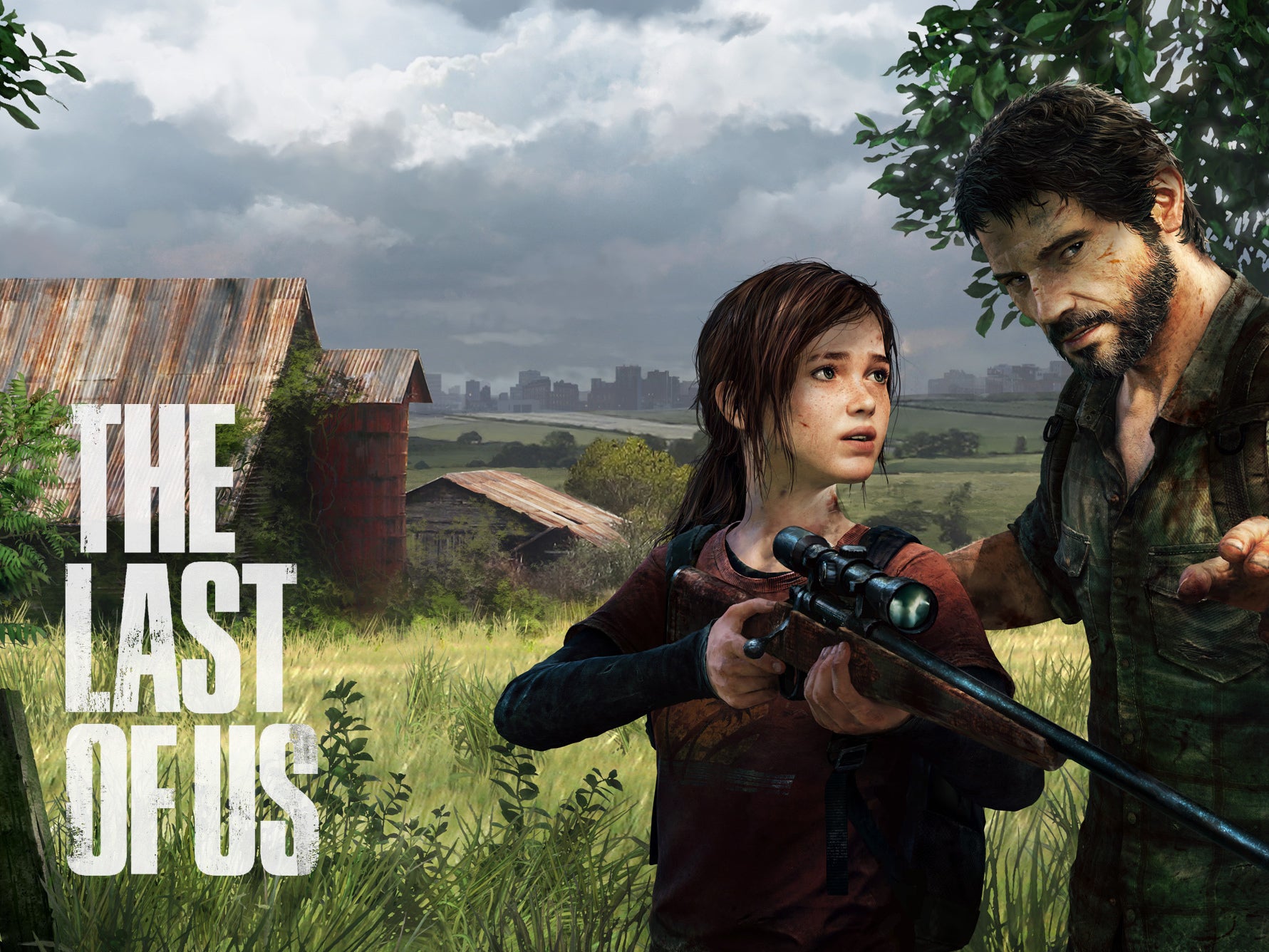
In almost every computer game you take on the role of a character, moving through the narrative of the game with said character. In the game The last of us you take on the role of Joel with his tragic backstory of his daughters death, seeing resemblance of his daughter in Ellie as he guides her through an apocalyptic world. With this being known, what gives a game the right to belong in the RPG category?


Perhaps it is stats and loot that really makes an RPG? But if you think about it, almost every game has some variation of this. This surely means that it has to be a certain type of stats and loot, one which allows you to improve your character by making changes in the game world. If you complete a series of quests that alter the game world, you will be rewarded with points or items which improve your character or avatar. In Battlefield 4 you complete missions and gain items which improve your characters ability to defeat its enemies and make changes to the game world. So this definition cannot be used to completely describe a role-playing game either.

With all of this information I have come to the conclusion that it is the element of choice that makes a role-playing game. You can choose what type of character you would like to play; do you want to be a wizard or a warrior. There is choice when it comes to upgrading your character; Where would you like to put these points, strength or hit points?  The decisions that you make during objectives in the game make an impact on the narrative; Kill the two headed beast or make friends with it and have it help you complete your objectives? Those kind of choices help to mold the narrative of your character using your own imagination, a sense that this is your character and no one else has the same character as you.

Where Do Role-Playing Games Originate?

Tabletop war-games have been around for hundreds of years, this in my opinion gave us the tools to build the modern RPG. In these games the players move model armies across a board, rolling dice to decide how much damage said army does to the opposing force. Usually the game comes with a codex which gives you the range of each unit and other useful information like hit-points. Along with the useful game information the codex also gives you a backstory for the faction of your choice, a reason for conflict with the other faction or factions. The most notable example of this would be Chainmail created by Gary Gygax and Jeff Parren published in 1971.

From these mechanics and some innovative thinking Dungeons & Dragons was borne. The game was invented by the creators of the wargame Chainmail, a gamer called Dave Wesley was implementing elements of role-play when playing the game with his friends. Catching wind of this Dave Arneson and Gary Gygax started to implement his own role-playing rules into the game. In 1974 the mechanics and new rules were implemented into the game we now know as Dungeons & Dragons. It was the first commercially available RPG game. D&D gave us all of the mechanics for every RPG game that spawned after it such as character skill points, stories and the element of chance from the dice.

World wide success stories such as the Warcraft franchise owe a lot to table top games like Dungeons and Dragons. we should never forget our roots and if we do forget, then we have lost our way. That is all for this afternoon folks and have a good one.

Monday, 12 October 2015

Game Studies - Desensitisation of Violent Video Games

Do Violent Video Games Desensitise Us To The Real Thing?

               
Gaming is a fairly new industry when you think about it but the argument, whether or not violent video games are appropriate, has been going on for some time. I believe that violent video games are fun to play, a good way to get frustrations out and relax. I have been playing violent video games such as Battlefield all my life and I am not a violent person, in fact far from it. The idea that violent video games promote violence is completely preposterous to me, violence comes from upbringing.
               
“We calculate that video game unit sales increased by an average of 9.6% per year. Assuming this applies to both violent and non-violent games, our estimated violent video game-to-violent crime elasticity of approximately -0.03 would predict almost 0.3% fewer violent crimes per year due to violent video game sales.”(Social Science Research Network, 2008) this study suggests that violent video games actually reduce violent tendencies, I believe this to be because people take anger out in games rather than real life. If for example a person was very stressed or angry about something, they could play a violent video game and take the anger out there instead.
                
Violent people may play violent video games, this does not mean they are violent because of the video games. Try as we might, we as gamers cannot seem to get this point across. Are violent films not just as bad as violent video games? If it is indeed the case why not ban everything to do with violence, while we are at it let’s ban kitchen knives and power tools, to keep the crazy violent people from doing any harm. Maybe that was a bit extreme but I'm sure that most of the population enjoys a good horror film, however we don't go around re-enacting everything that we see. In my opinion the effect of violent video games is lost, amongst a sea of violent images shown throughout films, television and the internet.
               
I understand that if a person plays violent video games, they may become immune to the effects of real life violence, becoming 'used to it'. This could reduce the effect of drink driving adverts such as Drink Driving Pub Crash (Think! Road Safety, 1992), people who play violent video games would not be the only people affected by this. If a surgeon is operating every day, five days a week, would he or she not also be immune to the effects of this advertisement? I believe the answer to this is yes, meaning that if violent video games did not exist, there would still be ways to desensitize the population to violence. The news show distressing images every day, would this not also desensitize people to the impact of violence? Again I believe the answer to this would be yes, making the impact of violent gaming negligible in this digital age.
                
Video game design is an art, this should not be tarnished by the select few individuals who do not have the common sense to realise that it is not real. The correlation between violence and violent game releases, according to the study by the Social Science Research Network, is that violent games reduce violent crime. I am not completely confident to say that this is fact, as these studies are never an exact science, but the results are interesting. The effort and time that goes into modeling characters, texturing, animating and rendering an entire game is fascinating. The artists should not suffer for other people’s ignorance, we decide our own actions, not anyone or anything else.

In conclusion, the argument that violent video games desensitize the players is valid. This does not mean that if violent video games did not exist, that there would not be other ways to desensitize people to violence. I therefore believe that the argument has gone on for far too long. As long as you give the right of free will, there will be ways to desensitize people to violence, despite banning violent video games. As technology advances and times move forward, new methods of creating awareness videos will be developed, making them more effective for today's digital environment. Video games will become more realistic in the future, not any more so than films however. This leads me to believe that violent video games are not the issue at all, it is our society that is the issue. More time put into awareness of child upbringing would reduce the amount of violent acts within society, this could be done similarly to drink driving advertisements. If children are brought up properly, they will become mature and understanding adults, less likely to commit crimes or act in a violent nature. Do you become aggressive and have urges to commit atrocities after playing violent video games?

-----------------------------------------------------------------------------------------------------------------------------------------------------------------

Bibliography

Car Keys UK (2009) Drink driving pub crash road safety advert. Available at: https://www.youtube.com/watch?v=TEVbSB2vz_8 (Accessed: 12 October 2015).
Gunter, B. (1998) Effects of Video Games on Children: The Myth Unmasked. United Kingdom: Continuum International Publishing Group - Sheffie.
LiveScience (2014) Do violent video games boost aggression? Study adds fire to debate. Available at: http://www.foxnews.com/tech/2014/03/25/do-violent-games-boost-aggression.html (Accessed: 12 October 2015).
More from the web (no date) Available at: http://www.rockpapershotgun.com/2013/02/14/study-finds-violent-games-reduce-violence-hmmmm/ (Accessed: 12 October 2015).
Park, A. (2014) Violent video games: they may make kids think in more aggressive ways. Available at: http://time.com/34075/how-violent-video-games-change-kids-attitudes-about-aggression/ (Accessed: 12 October 2015).
Video Games ProCon.org (no date) Available at: http://videogames.procon.org/ (Accessed: 12 October 2015).

Tuesday, 29 September 2015

Game Studies - History of Video Games Before The Crash in '83

For this module we have been sorted into groups of five or less, to produce a presentation on a subject chosen from the list provided by our lecturer Phil Morris. My teams chosen subject is The History Before The Crash, if you hadn't already gathered that from the title of this post. In our team we ground the subject down into five bite sized chunks, each of us choosing an era to focus our research on. The idea is then to unite all of our research and organise the presentation, with each of us a little more clued in on the subject.

So what is the "Crash"? The crash is a period in which the games industry went through quite a devastating recession. This was due to a few factors, not just the horrible E.T. game by Atari. The market was flooded with too many consoles of all shapes and sizes. This made it difficult to create multi-platform games and had consumers a little confused on which console to purchase, apparently they chose not to buy one at all. All of this was not aided by games companies making terrible decisions, such as ordering far too many units than they were possibly going to sell. Then comes the games them selves. Don't get me wrong, there were some brilliant games around at the time but they were swamped by poorly designed disappointments. The disappointing games were usually to do with the fact that the games companies were rushing the design of there games, in order to keep up with the amount of money that they were loosing, it is a very vicious cycle.

The era that I have chosen to focus on is 1970 - 79, so we should get started on that right?

The first notable game of the 70's was Computer Space, it was of course an arcade game released in 1971 and the system looked as expected for a futuristic design in the 70's. Now this was not your average arcade game, this was the first ever arcade game and set a standard that all future arcade systems would soon follow. The game was simple, you control a rocket ship and attack some flying saucers. You must outscore the flying saucers in hits to continue playing and increase your score.

So you know how it goes, you start working for a company, they ask you to prove yourself in a training exercise and then you make the game that changes the face of the game industry. At least that is what happened with Allan Alcorn when he created Pong for Atari in their training program. The game went through a few changes with some extra mechanics added before production in 1972 but before you know it Pong was a house hold name across the globe.


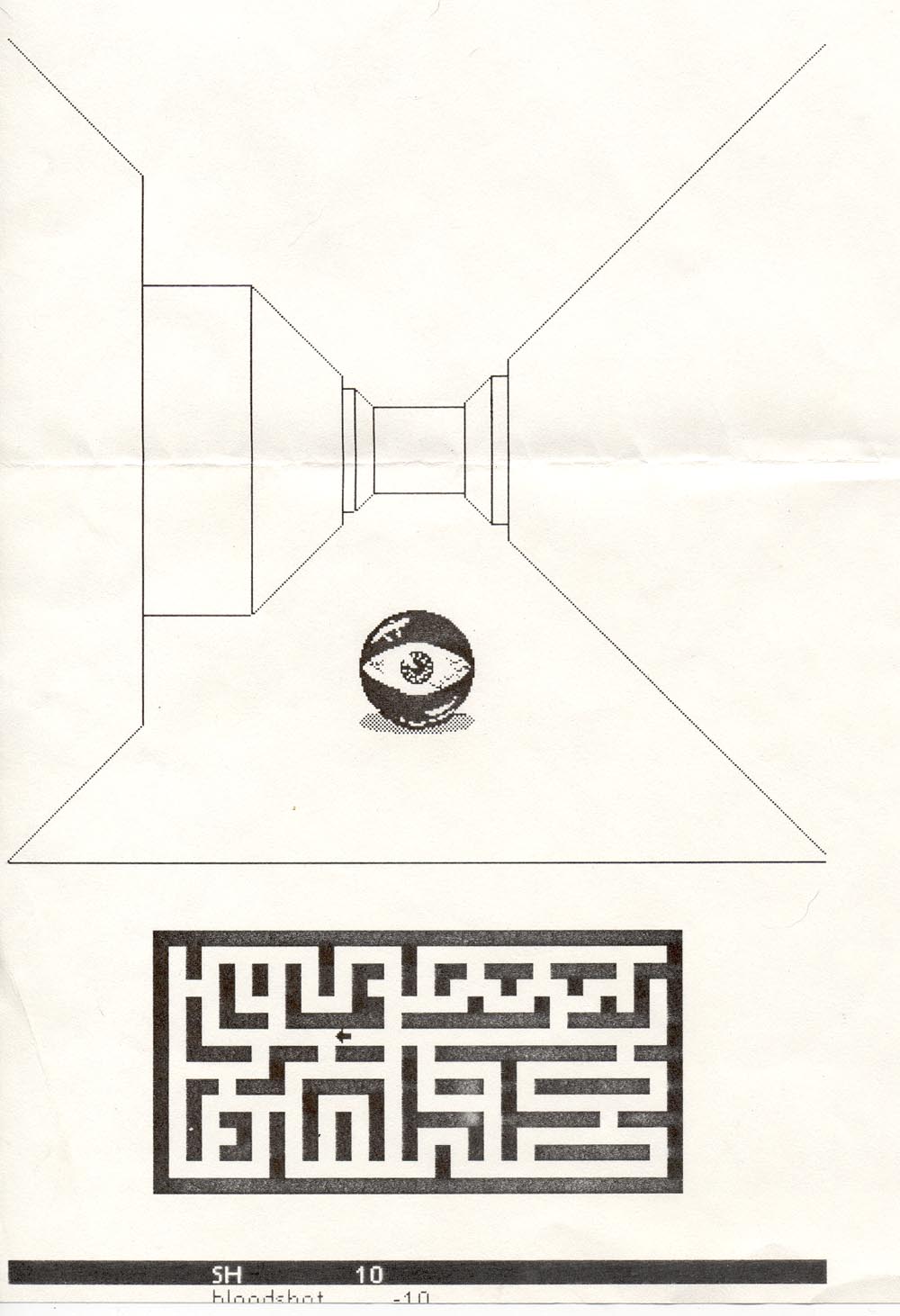
In 1974 the first first-person shooter was created, it was called Maze War. I always wondered where Call of Duty originated. This is the game that we can thank for all of those stress releasing moments, blasting the hell out of people that we do not know online. It is strange when you look back and see how things began and how far we have come in such a short space of time. I wonder if Jim Guyton and Bruce Malasky, the coders of Maze War, ever imagined a first-person shooter as complex as we see today. Perhaps they were just constrained by the technology at the time, having to create a simple wire-frame world rather than what was in their imagination.

1975 was the year that we started to see consoles creep into the homes of the public across the globe when Atari released pong on a home system. This home system was controlled by the most powerful microchip ever used in a consumer product at the time! And so an army of expert Pong players rose up and destroyed the world! No no wait that didn't happen but I do remember an iconic episode in That 70's Show, where Kelso re-engineered the console to produce smaller paddles because the game was becoming too boring. Perhaps this is why games became more complex over the years, because people did not have to go to the arcade to play them. People could play the games to their hearts content at home, making them seem repetitive and boring.

In 1977 Don Woods produced the text based adventure game adventure, no I don't have a stutter, the game was called Adventure. It was a text based role playing game and could possibly be the source of the Massively Multiplayer Online Role Playing Game genre. The game was based on Dungeons and Dragons but it was single player.


The last great game of the 70's, Space invaders, was released in 1978. This is the game that had people of all ages glued to the arcade machines. I have to admit that this was one of my guilty pleasures when I was younger, such simple but addictive mechanics. The game was produced by Midway and was the first arcade game to track and display high scores. This may have been the main contributing factor to the success of the game, everyone trying to get their name on the scoreboard for all to see.

And that is the end of the 70's......

Actually that's not true, a few more consoles were released along with some good and bad games which did not make the lime light. I would love to mention every game of the 70's but you would probably fall asleep before the end of this post ;-). That's it from me this afternoon, I hope you enjoyed reading my post and have a good one.


Bibliography

A History of Video Game Consoles (no date) Available at: http://content.time.com/time/interactive/0,31813,2029221,00.html (Accessed: 30 September 2015).
Computer Space - Videogame by Nutting Associates (no date) Available at: http://www.arcade-museum.com/game_detail.php?game_id=7381 (Accessed: 29 September 2015).
Correspondent, A. (2014) 42 interesting facts about the hit arcade video game Pong. Available at: http://www.mid-day.com/articles/42-interesting-facts-about-the-hit-arcade-video-game-pong/15795171 (Accessed: 30 September 2015).
DigiBarn Games: Maze War Retrospective (no date) Available at: http://www.digibarn.com/collections/games/xerox-maze-war/ (Accessed: 29 September 2015).
Donovan, T. (2010) Replay: The History of Video Games. United Kingdom: Yellow Ant.
Edwards, B. (2011) Computer Space and the Dawn of the Arcade Video Game. Available at: http://www.technologizer.com/2011/12/11/computer-space-and-the-dawn-of-the-arcade-video-game/ (Accessed: 29 September 2015).
Jerz, D. G. and Hill, S. (1997) DHQ: Digital Humanities Quarterly: Somewhere Nearby is Colossal Cave: Examining Will Crowther’s Original Adventure in Code and in Kentucky. Available at: http://www.digitalhumanities.org/dhq/vol/001/2/000009/000009.html (Accessed: 29 September 2015).
Murphy, C. (2015) The 10 Greatest Arcade Games of the 1970s | Big Fish Blog. Available at: http://www.bigfishgames.com/blog/the-10-greatest-arcade-games-of-the-1970s/ (Accessed: 29 September 2015).
Oxford, N. (2011) Ten Facts about the Great Video Game Crash of ’83. Available at: http://uk.ign.com/articles/2011/09/21/ten-facts-about-the-great-video-game-crash-of-83 (Accessed: 29 September 2015).
Pong Game (no date) Available at: http://www.ponggame.org/ (Accessed: 29 September 2015).
Video Game History Timeline (no date) Available at: http://www.museumofplay.org/icheg-game-history/timeline/ (Accessed: 29 September 2015).
(no date) Available at: http://www.arcade-museum.com/images/118/1181242070169.jpg (Accessed: 29 September 2015).
(no date) Available at: http://images.eurogamer.net/assets/articles//a/8/7/4/3/4/a_med_Atari_PONG_Arcade_Machine.jpg.jpg (Accessed: 29 September 2015).
(no date) Available at: https://upload.wikimedia.org/wikipedia/commons/thumb/0/08/TeleGames-Atari-Pong.png/220px-TeleGames-Atari-Pong.png (Accessed: 29 September 2015).
(no date) Available at: http://images.techhive.com/images/article/2012/10/guilde-100006853-large.png (Accessed: 29 September 2015).

Images
(Video Game History Timeline, no date)
(no date) Available at: http://www.arcade-museum.com/images/118/1181242070169.jpg (Accessed: 29 September 2015).
(no date)
Note: Image
(no date) Available at: http://images.eurogamer.net/assets/articles//a/8/7/4/3/4/a_med_Atari_PONG_Arcade_Machine.jpg.jpg (Accessed: 29 September 2015).
(no date)
Note: Image
(no date) Available at: https://upload.wikimedia.org/wikipedia/commons/thumb/0/08/TeleGames-Atari-Pong.png/220px-TeleGames-Atari-Pong.png (Accessed: 29 September 2015).
(no date)
Note: Image
(no date) Available at: http://images.techhive.com/images/article/2012/10/guilde-100006853-large.png (Accessed: 29 September 2015).
(no date)
Note: Image